Vertical Solar at High Latitudes: A New Opportunity for Solar Energy
- Trygve Mongstad
- Apr 17
- 3 min read
Traditionally, people have associated solar energy with sunny regions in the south. Historically, photovoltaics have deemed areas far north as less relevant.
This view is now changing: A recent article in PV Magazine describes the Arctic as a new frontier for solar. The latest report from the International Energy Agency IEA PVPS Task 13, titled Photovoltaics and Energy Security in the Greater Arctic Region, provides a more detailed and technical perspective on how solar performs in these regions. And the report highlights that vertical bifacial solar has an important place in the mix for high latitudes.
"PV systems deployed in high-latitude regions require specific design adaptations to address unique climatic conditions."
Report IEA-PVPS T13-40:2026 - Photovoltaics and Energy Security in the Greater Arctic Region, page 9.


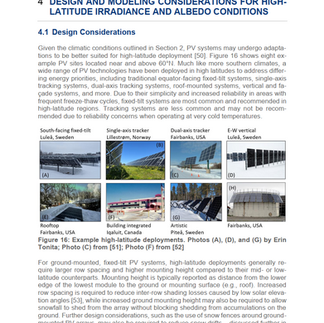


The full report can be downloaded here.
Requirements for solar in the north
From a physics perspective, solar conditions at high latitudes are quite different from those in central Europe or further south.
The IEA report highlights a few key characteristics:
The sun stays low in the sky, even in summer
There is strong seasonal variation in daylight
A larger share of the light is diffuse
Snow cover is common and can last for long periods
These factors affect not only how much energy can be produced but also how it should be captured. Lower temperatures can improve module efficiency, while snow can both reduce production and increase reflected light from the ground.
One important point from the IEA report is that high-latitude solar is not only about having less irradiation. It is about having a different type of solar resource: This means that systems optimized for high sun angles and strong direct irradiation are not always the best fit. Instead, designs that can capture light from multiple directions and make use of diffuse and reflected light can perform relatively better in these conditions.
The role of vertical and bifacial PV systems at high latitudes
The IEA report specifically mentions bifacial and vertical PV systems as relevant design options for high-latitude environments.
There are a few reasons for this choice:
Bifacial modules can utilize reflected light from snow-covered surfaces
Vertical systems are less affected by snow accumulation
East–west-oriented systems can capture light over a broader part of the
day
In addition, vertical systems tend to produce more in the morning and evening, which can be useful in many energy systems.

Read also: Vertical solar panels and snow
Vertical solar in the north: From research to real projects
We are now starting to see many real-world examples of solar installations at high latitudes. Over Easy Solar has been running R&D on vertical solar under northern conditions since 2022, showing very high energy yields compared to conventional solar.
Our own measurements and in-house simulation models show that a vertical rooftop solar installation in Tromsø should generate 650-780 kWh/kWp per year, while conventional flat roof systems in an east-west configuration would generate about 550 kWh/kWp. Vertical bifacial solar installations can deliver up to 40% higher specific energy yield than conventional flat roof PV at a latitude of 69 degrees north:
A more recent and large-scale example is the installation at Tromsøterminalen in Northern Norway. This project uses the VPV Unit from Over Easy Solar to implement vertical bifacial solar panels on a large logistics warehouse. As of April 2026, the system is now supplying around 25% of the building’s electricity consumption in the last week.
A broader energy perspective
The IEA report also places solar in the context of energy systems in the Arctic and other northern regions. In many cases, these systems face challenges related to:
Energy security
Long transport distances for fuel
High energy costs
In these areas, solar is not a complete solution on its own because of the extreme seasonality. But together with other technologies such as wind, storage, and grid infrastructure, it can contribute to a more robust and flexible energy system.
If you are interested in learning more about how vertical solar panels can be used at high latitudes, contact us today to explore the possibilities.