How Vertical Solar Helps Meet the EU’s Energy Performance of Buildings Directive
- Sofía García
- Jun 30
- 3 min read
Buildings account for around 40% of the EU’s total energy consumption, and nearly 50% of the EU’s gas usage is attributable to them. They are the largest energy consumers in Europe, and according to the European Commission, approximately 75% of these buildings have poor energy performance. Improving the efficiency of the existing building stock is therefore essential to saving energy, reducing energy bills for citizens and businesses, and achieving a zero-emission and fully decarbonised building sector by 2050. Yet the annual renovation rate remains very low, at just 1%.
That's why the European Union is accelerating the transition to clean energy in the built environment. With the revised Energy Performance of Buildings Directive (EPBD), which entered into force in 2024, buildings are no longer just energy consumers — they are becoming energy producers.
A key element of the directive is the solarisation of buildings. The EU is pushing for large-scale deployment of solar energy systems on rooftops and building surfaces as part of its broader decarbonisation strategy. For building owners, architects, and developers, this represents both a challenge and an opportunity.

Solar Requirements by Building Type
The Commission adopted its EU solar energy strategy in May 2022 and aims to reach at least 700 GW of solar photovoltaic by 2030. The EU had around 406 GW in 2025, but a big effort is still needed to reach the set target. To achieve this goal, the EPBD sets out clear rules for solar integration, depending on the type of building:
Residential Buildings
Existing residential buildings: Solar is not mandatory, but national or local authorities may require it for eligibility for renovation grants.
New residential buildings: Solar installations will be mandatory for buildings where the building permit is submitted from 1 January 2030, if the installation is technically suitable and feasible.
Business and Commercial Buildings
New commercial buildings: Solar is required for permits submitted from 1 January 2027, where feasible.
Existing large commercial buildings (>500 m²): Solar is required during major renovations or works requiring administrative approval from 1 January 2028, where feasible.
Public Buildings
Solar panels will be gradually required on existing public buildings, including schools, hospitals, and administration buildings:
2000 m² from 1 January 2028
750 m² from 1 January 2029
250 m² from 1 January 2031
Social housing buildings follow the same rules as other residential buildings.

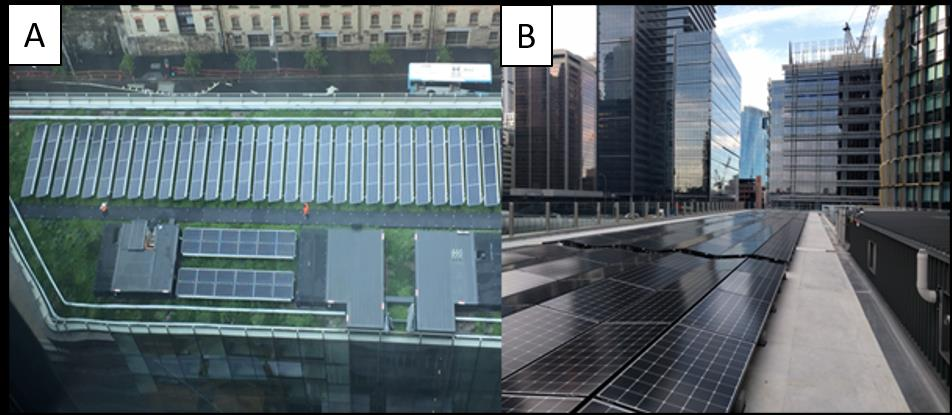
Solar energy can be integrated throughout a building — from roofs to façades, balconies, terraces, and even solar shading or tiles. Although multiple approaches exist, this article will concentrate on rooftop installations, which remain the most common and impactful option.
Solar panels on the roof of a public school in Oslo, Norway Solar panels on the rooftop of a cold storage terminal located in Tromsø, Norway Solar panels on the green roof of a residential house in Heilbronn, Germany
The Challenge: Not Every Rooftop is Ideal for Conventional Solar
While the policy direction is clear, implementing solar across Europe’s building stock is not always straightforward. Many buildings face constraints such as:
Limited roof space
Green roofs
Structural load limitations
Orientation and shading issues
Complex roof geometries
These factors can make traditional solar installations difficult or inefficient. Yet the directive still encourages buildings to maximise their solar potential wherever feasible. This is where alternative rooftop solar configurations become essential.
Vertical Solar: Expanding Opportunities for Compliance
Vertical solar installations provide a flexible solution where conventional rooftop systems struggle. By using upright modules arranged in rows, vertical systems can adapt to rooftops that are otherwise challenging. Advantages include:
They expand the range of buildings that can host solar installations — including those with limited or unconventional roof space, green roofs, or structural constraints that make traditional tilted arrays difficult.
They align with the EPBD’s emphasis on designs that maximise solar potential without costly structural changes, because they can be integrated in ways that respect existing building uses and roof functions.
They generate electricity in the morning and evening, complementing traditional rooftop arrays and supporting a more balanced energy profile.
Turning policy into action
The EPBD is a decisive step toward a more energy-efficient building stock. With deadlines for solar integration approaching — 2027 for new commercial buildings, 2028–2031 for public buildings, and 2030 for new residential buildings — building owners need flexible solutions to meet these obligations.
Vertical solar systems make it possible to expand solar deployment across diverse buildings, turning regulatory goals into real-world impact. By combining innovative technology with smart building integration, vertical solar helps Europe move closer to its 2050 zero-emission building stock target.